Change.vote
Director of Product, Elections at Change.org, May 2025 to now.
A free, nonpartisan guide to the whole ballot, especially the races in the middle that most people skip or guess on.
76%
Confidence score
voters more confident going to the polls (2025 pilot)
81%
Customer effort score
of 2026 midterm voters rated deciding easy (5+ out of 7)
348K
Voters reached
in the 2026 midterms, against a 300K goal
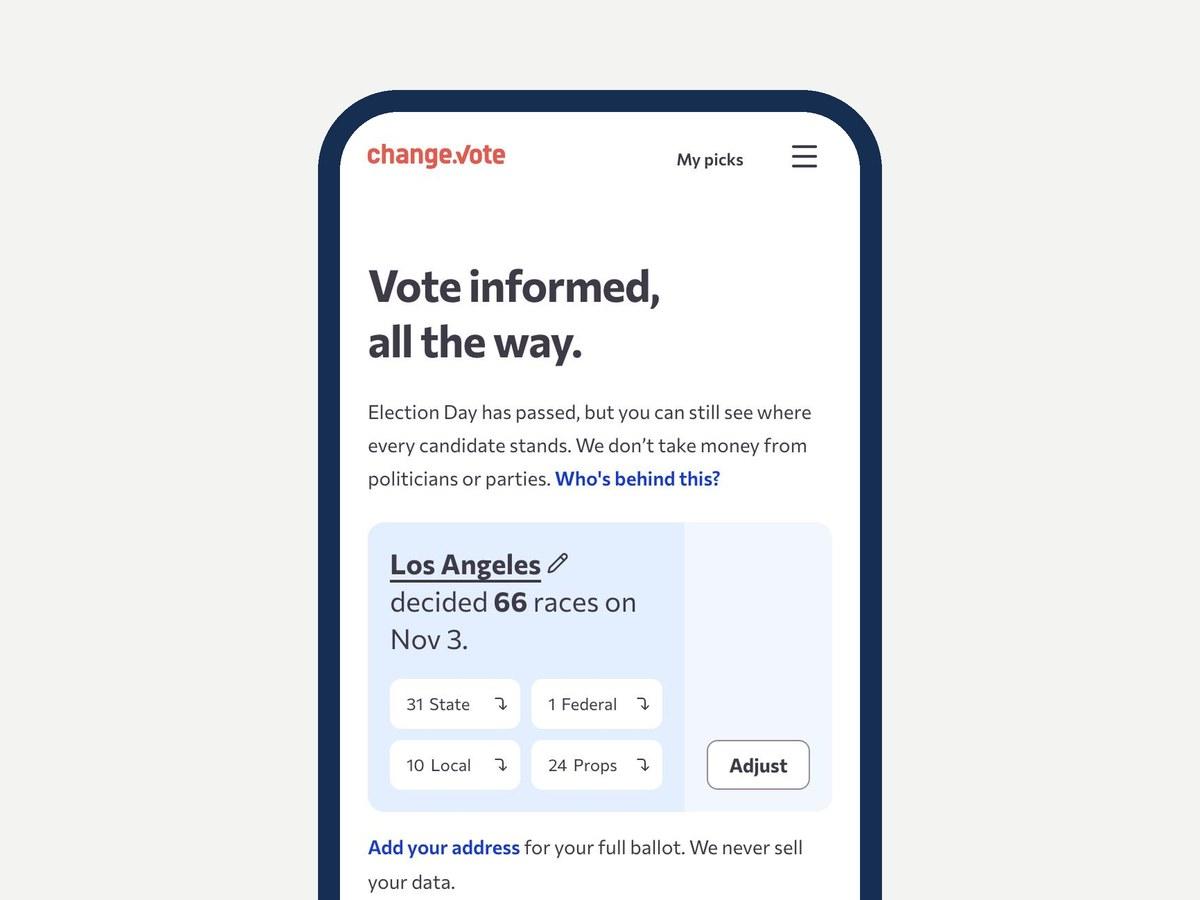
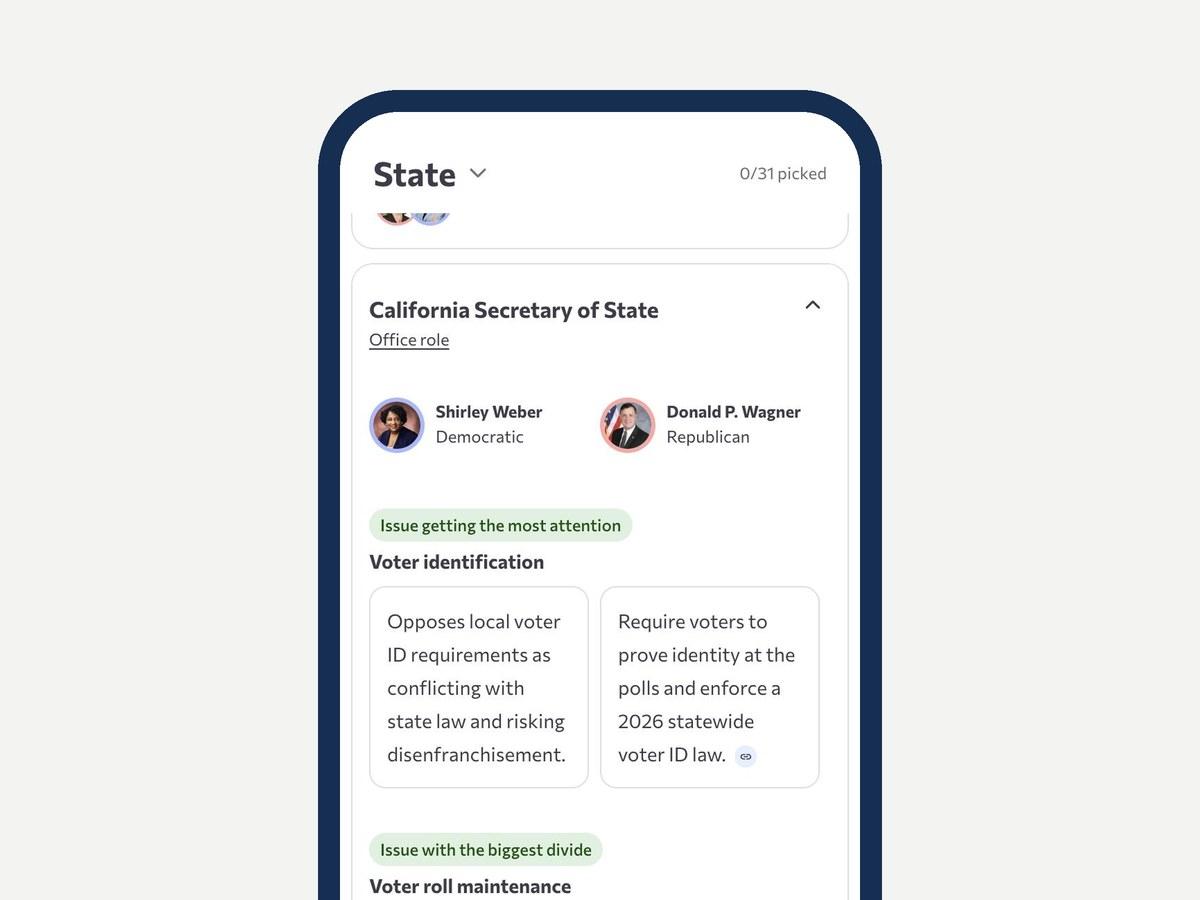
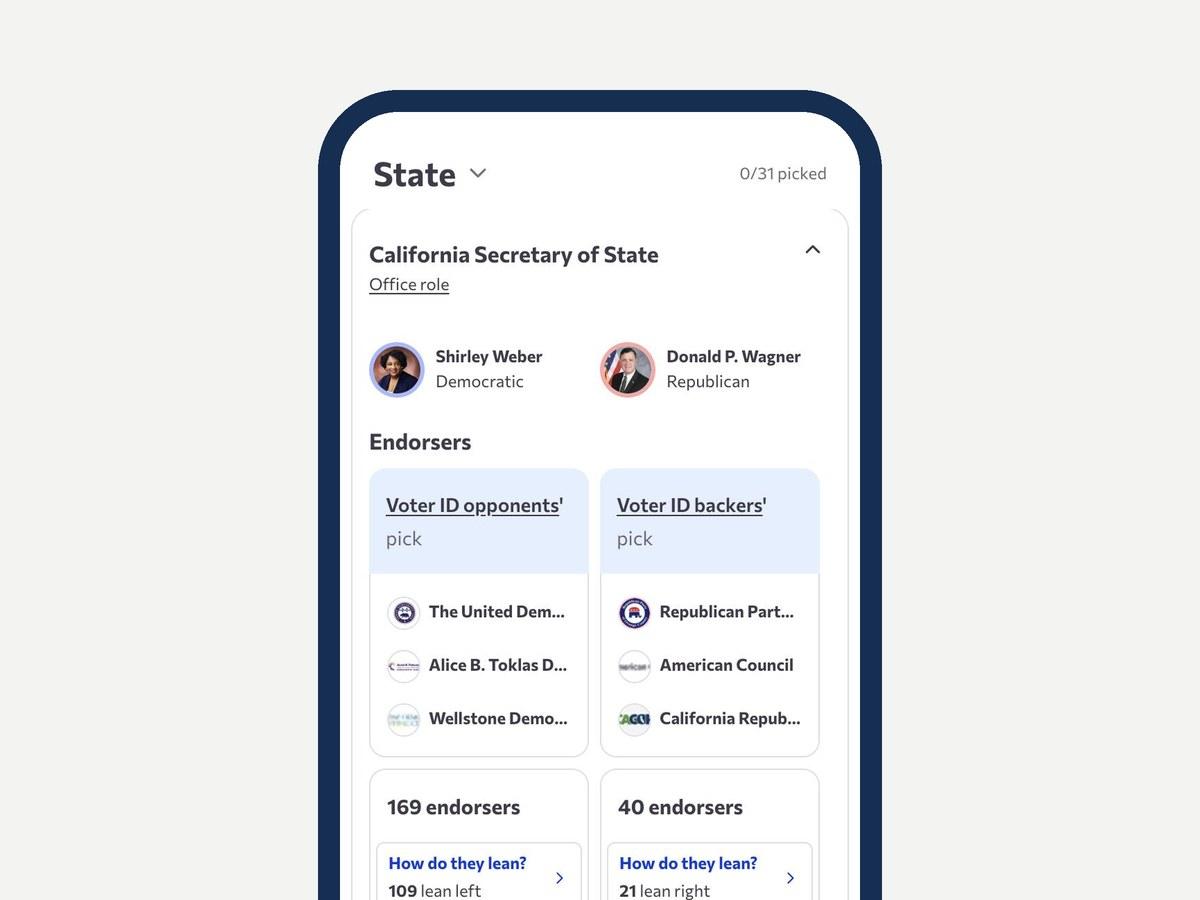
Your call, fully prepared
The pilot taught us that most voters didn't want to be told who to pick. They wanted to make their own decision, with each candidate's positions on the issues that matter, endorsers they recognize and sources they trust. So we rebuilt Change.vote around that need, for every race on the ballot.
- Each candidate's salient positions, side by side, backed by the same research pipeline
- Legible endorsers: local groups and voter guides people already know, in one place
- 81% of voters rated it 5 or higher out of 7 for ease of deciding (customer effort score)
The problem
Most voters know the top of their ballot. Below it, the races that set insurance rates, pass housing measures and seat judges, they have little to go on. Where there's no party label, many skip the race rather than guess. What fills the gap today is a shortcut: 70% of Americans get local political news from friends, family and neighbors (Pew, 2024). The guides that exist tend to have a poor experience, thin data or a narrow footprint.
I joined Change.org in May 2025 to take Change.vote from a six-month build to a product voters would actually use, and I lead product for it today.
How it evolved
2025. Joined Change.org as Senior Principal PM, Elections, in May; became Director of Product, Elections, in December. We were in the middle of an accelerated six-month build toward a fall pilot.
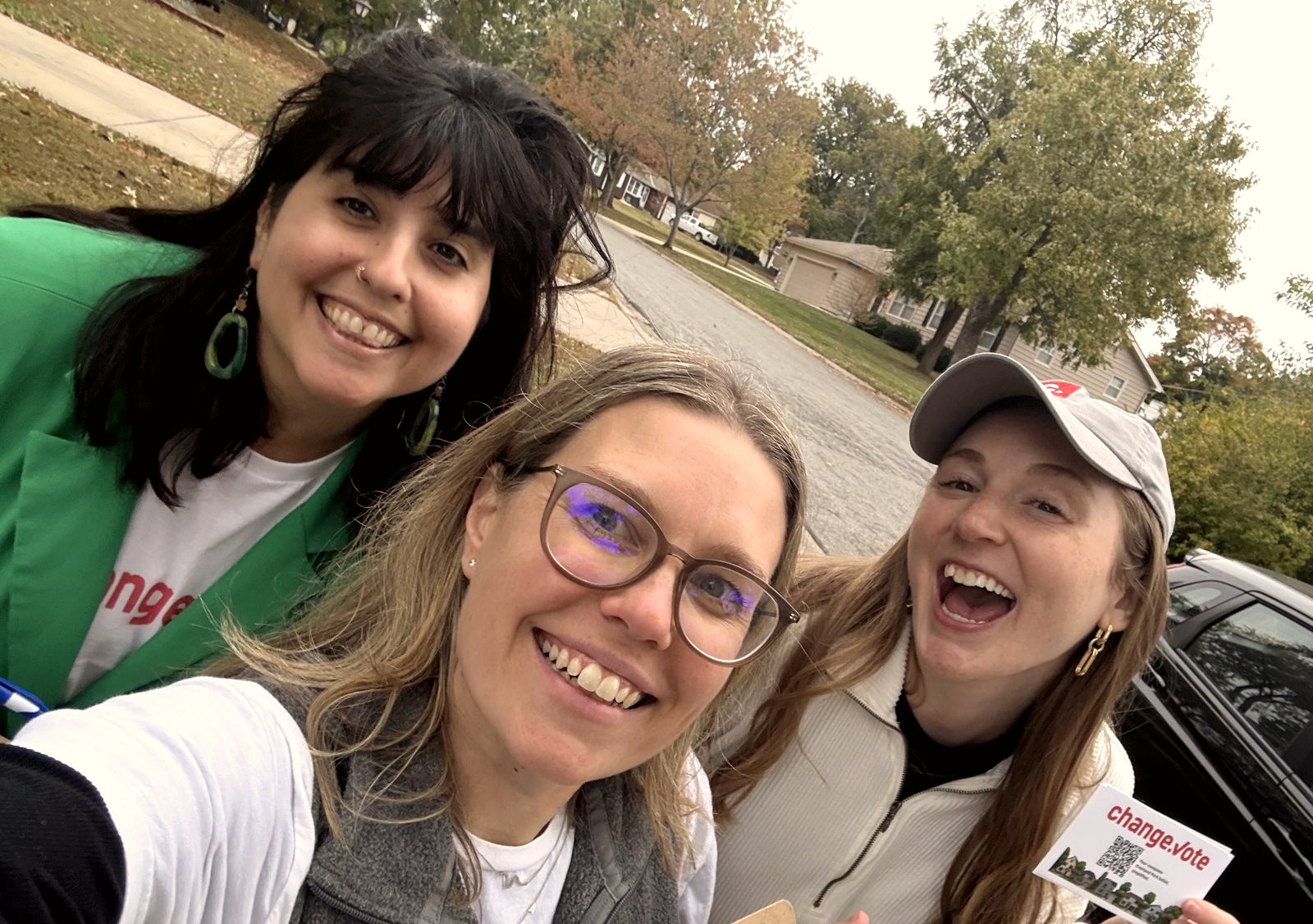
Fall 2025 pilot. After a six-month build, we launched in Boston, Charlotte and Overland Park in early October and ran through Election Day. More than 30,000 people visited and 4,600+ viewed their personalized ballot, just under 2% of voters in those cities. 76% said they felt more confident heading to the polls (our target was 50%), the experience averaged 4.3 out of 5, and people who opened their ballot spent 10+ minutes with it. Behind it: 150 human-reviewed research reports on 100 candidates and 50 races. The biggest lesson was that the address step and a long onboarding survey cost us voters, while people who skipped straight to an unpersonalized ballot still got real value from it. That pointed us toward a ballot-first experience.
March 2026 primaries. The pilot's clearest insight: most voters wanted to make their own call, informed by each candidate's salient positions, legible endorsers and sources they trust, more than they wanted to be handed a pick. We evolved the product to meet that need. Launched in Fort Worth and Charlotte: 130+ races and 20+ ballot questions. Introduced Instant Ballot, which shows your full city ballot with no address needed.
Spring 2026. Spoke at AWS Imagine for Nonprofits on using AI for deep candidate research.
November 2026 midterms. Live statewide in California and Florida across 32 cities: 834 candidates, 94 measures and 22,500+ endorsements, up from 154 candidates and 4 measures in the spring. The ballot was rebuilt around three ideas from research: open your actual ballot on the homepage, compare candidates side by side on the issues where they actually differ, and make picking a race how you move through the ballot. Compared with the spring primary, 2x more voters opened a head-to-head comparison and 13x more saved a pick.
Impact
The midterms beat nearly every goal we set. 348K voters used Change.vote (goal: 300K), and 81% said it was easy to decide their vote (goal: 75%). Asked what helped, voters named the side-by-side comparison and the issue stances first, then seeing who supports each candidate. Picks happened fast, in about 72 seconds on average, and an eight-candidate race converted as well as a head-to-head. We also built 1,200+ public endorsements from voters and guides from 59 partner organizations.
From the field
“It’s like a dating app for politics, but actually good. It’s everything I care about in one shot.”
“A game changer for working moms who are hanging on by a thread.”
“This is a legit pretty awesome service… I used it and loved it.”
How we built it
What powers it. Guidance is only as strong as what goes into it. Change.vote's comes from three things competitors don't have together: data we gather from high-quality local news, government sources and partner groups, a research pipeline where AI drafts and checks but a person always signs off, and prompts built and tested like a product. In the pilot those prompts produced a match score; today they find the issues where candidates differ most and surface the endorsers voters recognize.
Proprietary data
Gathered from sources voters trust
- High-quality local news, government and official sources, scraped and source-checked
- 22,500+ endorsements and voter guides from local groups and partners
- Every race, candidate and measure on the ballot, filling gaps other data providers miss
Research pipeline
AI drafts, AI checks, people sign off
- ChatGPT deep research writes a sourced report on each candidate
- Claude grades it for sourcing, neutrality and accuracy
- A researcher takes the final pass; updates get a diff review
Prompt construction
Built to surface what actually matters
- Finds the issues where candidates differ most and that matter most to voters and the race
- Turns endorsements into signals voters can read at a glance
- Worked examples, chain of thought and checkpoints, refined over 1,500+ iterations
Guidance voters can trust
The issues where candidates actually differ and the endorsers that matter, in plain language, so voters can make their own call. In the pilot, 76% of voters felt more confident going to the polls, and reviewers caught just 4 critical errors in 388 generated attributes, all fixed before launch.
In the pilot, the LLM-driven matcher I built blended what a voter told us with the validated research. Issue alignment and experience lead; endorsements and viability carry lighter weight, tuned to the type of race, since what matters in a judicial race isn't what matters for mayor. Because the score and its reason are produced in one pass, the explanation always matches the number.
Better research, and our own data. We rebuilt deep research around a source manifest and post-processing, which halved our reliance on weak sources and editorializing. Where BallotReady and Ballotpedia had gaps, we filled in races, measures and geographic data ourselves: our first steps as a data provider.
The model electorate. A simulated electorate of synthetic voter personas built from Census data, used to test product and ad ideas before a launch goes live.
Settling debates with real voters. Our highest-conviction bet was that voices from local voters and endorsers should lead the ballot. Research couldn't settle it, so we tested it live with 107,000 voters in the final week before Election Day. Leading with voices didn't beat leading with the facts. It only helped when every candidate had a real comment behind it, and empty or lopsided cards cost us trust. That points 2027 toward complete, explained endorsements, not just more of them.
What I'm thinking about next
A few questions I keep coming back to:
- When someone asks a chatbot about their ballot, what does a trustworthy answer look like? And what can a voter guide do that a chatbot can't?
- How do you make an endorsement carry its reason, not just a name? Voters told us the "why" mattered far more than the logo.
- What would get more people to vote in primaries, where fewer voters often decide who's on the November ballot at all?